
Guarding the Heart: Why Science May Never Catch Up to the Hesychasts
At the intersection of neuroscience and human performance, a subtle but significant shift is taking place.
For decades, contemplative practice has been framed largely through a secular paradigm — as a means of stress reduction, attentional stability, and emotional regulation. Yet recent acknowledgements from prominent neuroscientists suggest that this framework is insufficient.
Dr Andrew Huberman, a Stanford neuroscientist known for uncompromising methodological rigour, recently noted that prayer appears to access a physiological state that secular meditation does not achieve — even though the mechanisms remain elusive.
This admission highlights an important gap.
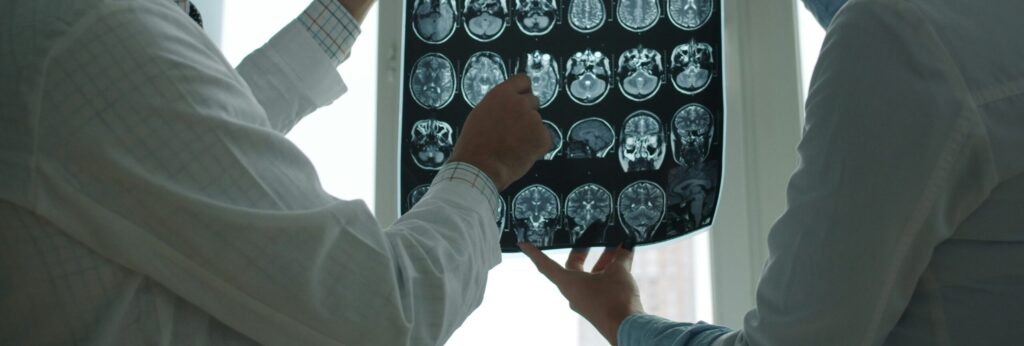
While science has extensively mapped the neurophysiology of mindfulness — down-regulation of the amygdala, increased prefrontal engagement, shifts in attentional networks — it struggles to meaningfully map the brain during prayer.
In my view the distinction is not merely technical; it is conceptual.
Mindfulness typically encourages observation of thought.
Prayer requires the surrender of will.
In my own experience, this difference is not abstract. It is tangible — cognitive, emotional, and physiological. And it appears that the ancient Hesychasts of the Orthodox Christian tradition understood the necessity of this surrender with a precision that contemporary neuroscience is only beginning to approach.
THE HESYCHASTIC METHOD: VIGILANCE RATHER THAN VOID
Modern wellness discourse frequently equates contemplative practice with “emptying the mind” or cultivating an inner void. This association bears little resemblance to the Christian contemplative tradition.
In Orthodox Hesychasm (from hesychia, meaning stillness), the aim is not emptiness but vigilance. Stillness is not the absence of thought; it is the disciplined presence of mind required to guard the intellect.
St. Paisios the Athonite offered a particularly lucid metaphor: the mind is an airport. One cannot stop planes (thoughts) from passing overhead, but one can prevent them from landing.

The Hesychast stands at the “door of the heart,” examining each approaching thought with almost forensic scrutiny:
- Is it true?
- Is it constructive?
- Is it aligned with God, or merely a distraction?
If a thought attempts to “land” — anxiety, pride, resentment, indulgence — the Hesychast does not merely observe it. They reject it, redirecting attention immediately toward what is higher.
They do not seek cognitive emptiness.
They anchor the mind through the Jesus Prayer:
“Lord Jesus Christ, Son of God, have mercy on me.”
This practice is not passive. It is an active, disciplined confrontation with the stream of inner stimuli. In this sense, Hesychasm is not relaxation; it is cognitive and, more significantly, spiritual warfare.
Contemporary neuroscience is beginning to provide a framework for understanding what this warfare accomplishes.
THE NEUROSCIENCE OF “THE GUARD”
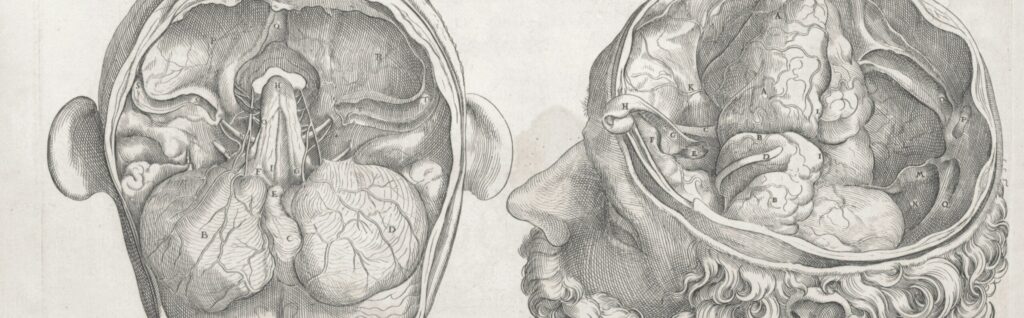
When an individual denies a wandering thought permission to land, they recruit a specific neural structure: the Anterior Mid-Cingulate Cortex (aMCC).
In neurobiology, the aMCC has emerged as a crucial node associated with volitional effort, impulse inhibition, and persistence under friction. It activates when a person resists an immediate impulse in favour of a higher aim.
Modern digital environments systematically weaken this system.
We are conditioned to collapse into every impulse:
- boredom → scrolling
- desire → acquisition
- irritation → reaction
The Hesychast does the opposite. Through sustained Nepsis (watchfulness), they repeatedly strengthen the brain’s capacity for self-regulation. Each act of catching and redirecting a thought becomes a micro-rep — a neurological repetition that trains the aMCC like a muscle.
But Hesychasm does not reduce to willpower.
If it did, it would simply produce burnout — a form of cognitive white-knuckling.
SURRENDER AS A NEUROCOGNITIVE VARIABLE
Here Hesychasm diverges fundamentally from secular cognitive training.
The Jesus Prayer introduces a second and often overlooked dimension: surrender. “Have mercy on me” is not a poetic flourish. It is an admission of limitation. It is a relinquishing of the very self-will that fuels many forms of anxiety.
Neurocognitively, this pairing — High Effort (vigilance) + High Surrender (trust) — produces a paradoxical state: simultaneously alert and calm, active yet still.
Mindfulness invites the practitioner to observe thoughts without attachment.
Prayer asks the practitioner to surrender the will beneath the thoughts.
Where mindfulness says, “notice,” prayer says, “yield.”
This yielding — when genuine — softens the internal rigidity that often generates cognitive noise. It is a release of the need to orchestrate, control, and self-justify.
It is a physiological quieting of the self.
COGNITIVE FRAGMENTATION: THE MODERN CRISIS
We now inhabit an attention landscape engineered to dismantle the “Guard at the Door.”
Digital platforms operate on a single premise: that the user benefits from perpetual openness — perpetual stimuli, perpetual alerts, perpetual “engagement.” This is achieved by exploiting dopaminergic reward pathways to ensure that the runway of the mind remains perpetually congested.
The consequence is a form of Cognitive Fragmentation.
We are not simply distracted; we are intruded upon. We are not simply busy; we are divided. And a person who cannot guard the door of the heart cannot maintain depth, trust, or coherence. They simply react to the loudest plane arriving.
We confuse this reactivity with awareness. But in the Hesychastic tradition, this state of perpetual distraction is understood as a form of spiritual captivity — a loss of true freedom.
RECLAIMING THE CITADEL
Nepsis is not the domain of monastics alone. For those in leadership, science, medicine, and high-stakes environments, the disciplined guarding of attention is not optional; it is existential.
Without an interior citadel, one is eventually overrun.
For me personally a practical reinterpretation of St. Joseph’s teachings for modern life involves three movements.
1. The Forensic Pause — Guarding the Door
Interrupt the autopilot.
When a thought arises — fear, resentment, self-doubt, distraction — pause.
Do not permit immediate landing.
Ask: Does this thought serve my purpose, or my impulse?
2. The Redirection — Anchoring the Mind
Do not attempt to suppress thought through force.
Redirect its energy.
If the impulse is anger, direct the intensity against the distraction itself.
Then anchor attention through a phrase of alignment, for me it’s the Jesus Prayer or something like: “Lord, guide my will.”
3. The Alignment — Surrender of Self-Will
This is the dimension most absent in modern productivity culture.
We optimise to assert control.
Prayer trains us to yield control.
There is profound cognitive relief in releasing the internal compulsion to direct every outcome, to justify every action, to control every contingency.
BEYOND THE MAP
Neuroscience continues to refine its map of the contemplative mind:
- activation of the aMCC
- modulation of the amygdala
- changes in neural oscillatory patterns
These are valuable insights. But a map is not the terrain.
And neural imaging is not the same as the healing of the soul.
Science may eventually trace the contours of what the Hesychasts practiced.
It may never fully capture the transformation itself.
The algorithms urge openness.
The noise urges surrender of attention.
Close the door.
Guard the heart.
And rediscover the strength that only rises from stillness.

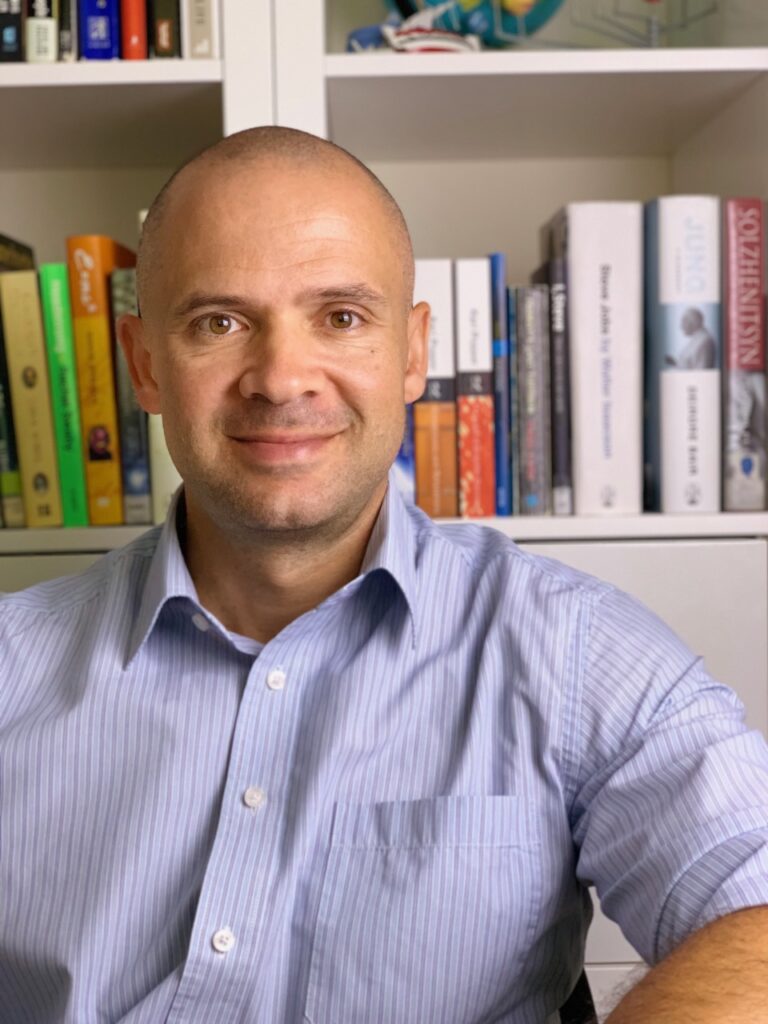
Dr John Coumbaros
Scientist. Seeker. Apprentice.
Thanks for reading. You can get more actionable ideas in my email newsletter, Supersets for the Soul — Training Character, One Superset at a Time.
Each edition delivers a simple, powerful rhythm for the week — a mental, physical, and spiritual rep to train your character from the inside out.
Receive it straight in your inbox. No spam. Only weekly guidance to build Stillness & Strength.